Extra Virgin Olive Oil
Why on earth a whole page about Extra Virgin Olive Oil?
Well… it is a fair question. Why dedicate an entire section of a website about Food Quality, Nutrition and Health to a single food?
Because extra virgin olive oil sits exactly at the intersection of all three.
Extra virgin olive oil connects childhood memories and the land where I grew up with more than twenty years of working with food quality, my background in chemistry, my work and interest in nutrition, and an ever-growing curiosity about what makes this apparently simple food so extraordinary.
In many ways, extra virgin olive oil sits exactly where food quality, nutrition and health meet.
It Started Long Before the Science
Extra virgin olive oil is very much connected with my memories of childhood, family and home.
I come from Abruzzo, in central Italy, where two plants dominate much of the green landscape: grapevines (typically Montepulciano and Trebbiano) and olive trees.
Traditionally, the two often grew side by side. Olive trees could be found amongst the vines or planted along the boundaries of vineyards or at times in a small grove.
When the grape harvest finished in the still-warm days at the beginning of autumn, another harvest was approaching.
The olives.
Olive harvesting traditionally began around the middle of October and could continue into December. It was hard work, and as autumn turned into winter, there were years when olives were still being collected with snow on the ground — or even on the trees. I really did not like that, although I look back at it with some nostalgia now, I know I still would find it really hard work!
But after all that work came one of the best moments: taking the olives to the frantoio — the olive mill.
I still remember waiting there for our turn.
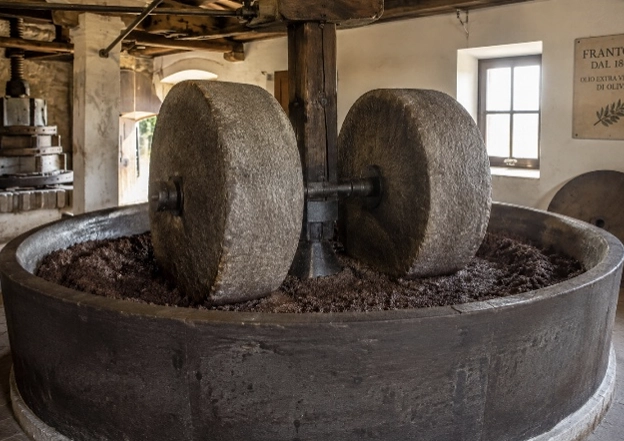
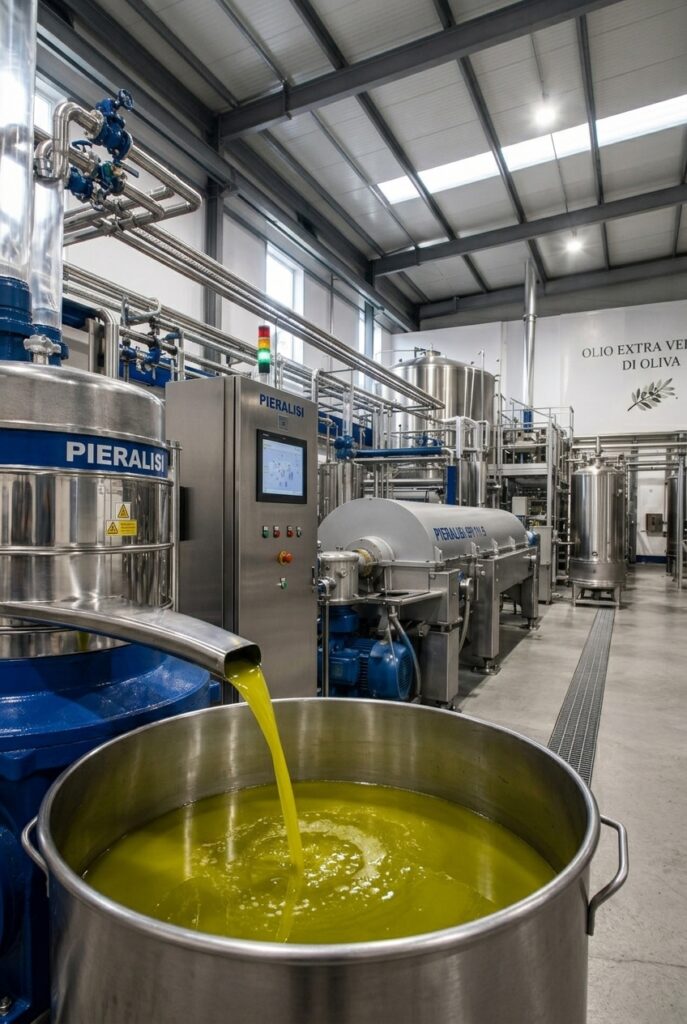
At the time, it was common to see the olives going into the macina, the traditional mill where enormous stone wheels slowly crushed the olives into a paste before the oil was extracted.
And then, eventually, came the oil.
Fresh, intensely aromatic, cloudy and green — something completely different from simply picking up a bottle from a supermarket shelf.
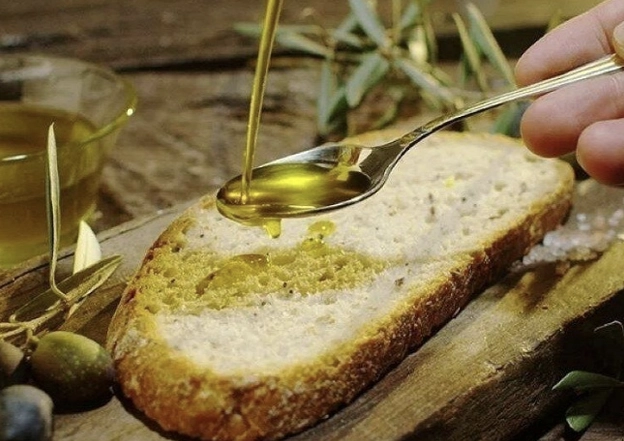
From time to time, the frantoiano (the person running the olive mill) or his wife would bring out some bread, perhaps toasted if it wasn’t fresh from that day, and drizzle the newly extracted oil over it.
Nothing complicated.
Bread and freshly pressed olive oil.
But what a taste!
Those are some of my earliest memories of olive oil.
Then It Became Part of My Work
Years later, I found myself returning to the frantoio for very different reasons.
This time, I wasn’t simply waiting for our family’s olives to be processed. I was there professionally — checking hygiene and production practices, taking samples and assessing the quality of the oil.
My personal connection with olive oil had begun to meet my professional life.
The more I learned, the more curious I became.
That curiosity eventually led me to undertake training in the sensory evaluation of virgin olive oils, alongside my existing background in food quality and chemistry.
And something else fascinated me.
Growing up, I had always heard my parents and local farmers say that olive oil was “the best fat”.
For years, I wondered how much of that was science and how much was simply tradition. After all, olive oil was what we produced, what we ate and what generations before us had always used. Perhaps we naturally wanted to believe that ours was the best.
What a satisfaction, therefore, to discover later, as my knowledge of nutrition developed, that — as so often happens — our parents knew more than we thought.
Today, we have more science with which to understand why.
More Than a Source of Fat
Extra virgin olive oil is mainly fat, with a high proportion of oleic acid, a monounsaturated fatty acid and one of the characteristic components of the traditional Mediterranean diet.
But describing EVOO simply by its fatty-acid composition misses much of what makes it interesting.
Unlike refined oils, extra virgin olive oil is obtained directly from olives using mechanical processes and retains a complex range of naturally occurring minor components.
Among them are phenolic compounds, tocopherols, squalene, phytosterols, pigments and volatile compounds.
Although present in small quantities, some of these substances contribute to aroma and flavour, some influence the stability of the oil, and others have attracted considerable scientific interest because of their potential biological effects.
This is where extra virgin olive oil becomes fascinating from both a food-quality and nutritional perspective.
When the Nutrition Label Tells You Almost Nothing
Standard nutrition declarations are useless when assessing olive oil quality.
Because olive oil is pure fat, routine commercial lab testing focuses almost entirely on basic macronutrients and calories. Compare the mandatory nutrition table of an artisanal, high-polyphenol EVOO with a cheap, degraded supermarket blend, and they look identical on paper: ~100% fat, high monounsaturated content, identical energy values.
The table tells you nothing about fruit health, harvest timing, oxidation levels, processing temperatures, or sensory defects. Nor does it reveal the concentration of bioactive phenolics. To evaluate EVOO, you have to look far beyond the back-label nutrition box.
Where Food Quality Meets Nutrition
The quality and nutritional characteristics of extra virgin olive oil are not completely separate subjects.
What happens to the fruit — from the olive tree through harvesting, crushing, extraction and storage — can influence the characteristics of the oil we eventually consume.
Variety, ripeness, the condition of the fruit, the time between harvesting and milling, processing conditions, exposure to oxygen, storage and many other factors can affect its sensory and chemical profile.
EVOO is therefore an excellent example of a principle that I consider important when looking at nutrition:
It isn’t only what food we eat that matters. The quality and history of that food can matter too.
Polyphenols: A Particular Interest
Among the components of extra virgin olive oil that fascinate me most are its phenolic compounds.
These include compounds related to hydroxytyrosol, tyrosol, oleuropein and ligstroside, together with substances such as oleocanthal and oleacein.
They help explain some of the characteristic sensations of a good EVOO — including bitterness and that distinctive peppery sensation at the back of the throat — but their significance goes further.
They contribute to the oil’s oxidative stability and have become an important area of research in nutrition and human health.
This is also why EVOO is so interesting when we talk about functional foods and nutraceuticals.
Extra virgin olive oil is, of course, a food — not a supplement and certainly not a medicine. Yet the biologically active substances naturally present within it, and what happens to those substances during production, storage, cooking and in our bodies, make it a very interesting subject of nutritional research.
A Food With an Authorised Health Claim
Health claims on food are rightly controlled in Europe under strict EFSA (European Food Safety Authority) regulations. Unlike the endless stream of unregulated “superfood” marketing claims, olive oil polyphenols possess an officially authorised EU health claim:
Olive oil polyphenols contribute to the protection of blood lipids from oxidative stress.
To legally carry this claim, the oil must provide at least 5 mg of hydroxytyrosol and its derivatives per 20 g of oil, with the beneficial effect achieved through a daily intake of 20 g.
Why is this remarkable? We are surrounded by supplements and products promoted with all sorts of impressive health language, yet the health claims that can legally appear on foods in Europe are actually very tightly controlled.
And here we have olive oil, a food that has been part of our diet for thousands of years, with a specific authorised health claim for its polyphenols.
I think that says something about just how exceptional this food really is.
An Area I Continue to Explore
The more I have learned about extra virgin olive oil, the more I have realised how much there is still to explore.
My particular interests include the relationship between quality, sensory characteristics, phenolic composition, oxidation and stability, processing, cooking and human nutrition.
There is a lot of confusing and contrasting information surrounding olive oil.
Questions that appear straightforward can become complex when we look at the actual science.
Rather than trying to answer all those questions on this page, this is intended as the starting point — a place from which I can explore different aspects of EVOO, the research behind them and their practical relevance.
A Story That Continues
For me, extra virgin olive oil brings together things that at one time in my life were completely separate.
It started with childhood memories in Abruzzo — olive trees amongst the vineyards, cold days harvesting olives, waiting at the frantoio for our turn, and tasting the new oil simply drizzled over bread.
Years later, I returned to the frantoio professionally, looking at hygiene, taking samples and assessing the quality of the oil. Then came sensory training, nutrition, and an even greater curiosity about the science behind something that had been part of my life all along.
And there is still so much I want to learn, taste and understand.
Food Quality • Nutrition • Health.
Few foods bring those three worlds together quite like extra virgin olive oil.
Oils I've Tasted
Knowing the theory is one thing. Tasting the oil is another.
From time to time, I will publish my sensory evaluations of individual extra virgin olive oils — looking at their aromas, fruitiness, bitterness, pungency, balance and other characteristics, together with information about the producer, cultivar, origin and harvest where available.
Thiese are simply to give oils a score or trying to identify “the best olive oil”. Part of the fascination of EVOO is discovering the great diversity that can exist between oils, cultivars, regions and harvests.

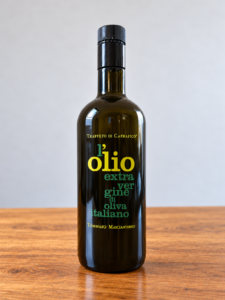
Trappeto di Caprafico BLEND– Degustazione RUANO
Un Blend abruzzese robusto, dal fruttato maturo, con note di pomodoro ed erba/foglia. Leggi le nostre note di degustazione e il verdetto su questo olio per l’uso quotidiano.

Trappeto di Caprafico BLEND– RUANO Tasting
A robust Blend from Abruzzo, with ripe fruitiness, tomato and grass/leaf notes. Read our tasting notes and verdict on this oil for everyday use.
Learn to Taste Extra Virgin Olive Oil
You don’t need to be a professional taster to begin recognising and appreciating the characteristics of a good extra virgin olive oil.
I am planning small, informal and affordable olive-oil tasting classes in the London area, aimed at people who simply enjoy olive oil and would like to understand it better — how to taste it, recognise its positive characteristics and discover just how different one EVOO can be from another.
Details of these and other learning opportunities will be published on the Courses page as they become available.
Oils I Consider Worth Discovering
My interest in EVOO also means that, from time to time, I come across oils that I consider particularly interesting, whether for their overall quality, sensory characteristics, provenance or naturally high phenolic content.
Where appropriate, I may select a small number of these for the Curated Shop.
This is not a conventional olive-oil shop with a permanent catalogue.
Olive oil is a seasonal product. Harvests differ, availability changes, small producers sell out, and an exceptional oil is not something that should simply be replaced with another product because a space on a shop page needs filling.
So there may sometimes be several oils available, sometimes only one, and sometimes none at all.
If there is nothing there, it simply means that at that precise time I don’t have an oil I want to recommend.
You can always check the Curated Shop to see what I have currently selected.
Latest Insights
Extra Virgin Olive Oil

What’s Really in the Bottle? Exploring Extra Virgin Olive Oil, One Bottle at a Time
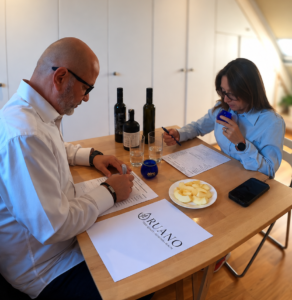
Julia and I are starting a new series of RUANO Tastings, exploring extra virgin olive oils from artisan producers to familiar supermarket bottles. We’ll assess their sensory profile, show the RUANO Spiderweb and share our final RUANO Verdict — helping you see what’s really in the bottle.
How to Choose a Good Extra Virgin Olive Oil
How do you choose a good extra virgin olive oil when faced with dozens of bottles that all seem much the same? The type of oil, packaging, price, origin, harvest date and label can tell us a lot. A practical guide to filtering out poorer choices and recognising an EVOO that deserves a place on your table.
Pomace Olive Oil on Restaurant Tables? No, Thanks!
A restaurant may invest in excellent ingredients, but what’s the point if it then serves pomace olive oil at the table? Let’s look at what this product really is, how it differs from extra virgin olive oil, and why the oil a restaurant chooses says a great deal about the quality it wants to offer its guests.
Oils i've tested

Trappeto di Caprafico BLEND– RUANO Tasting
A robust Blend from Abruzzo, with ripe fruitiness, tomato and grass/leaf notes. Read our tasting notes and verdict on this oil for everyday use.
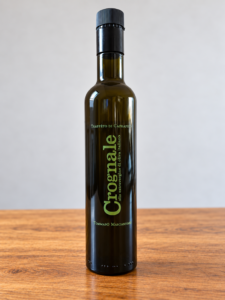
Trappeto di Caprafico CROGNALE– RUANO Tasting
We taste Crognale from Trappeto di Caprafico, an Abruzzo cultivar with a green fruity profile, showing fresh almond, tomato and grass/leaf notes. More rounded and less robust than the Intosso, with clearly expressed pungency and more moderate bitterness.
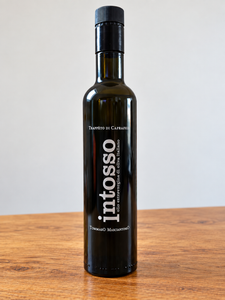
Trappeto di Caprafico INTOSSO– Extra Virgin Olive Oil Tasting
Testing Intosso from Trappeto di Caprafico, an ancient Abruzzo cultivar with a distinctly green fruity profile, intense persistent pungency, and clear grass/leaf, tomato and artichoke notes. A robust, well-expressed oil with substantial but well-integrated bitterness.
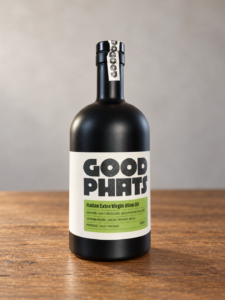
GOOD PHATS Italian – RUANO Tasting
We tried GOOD PHATS Italian Extra Virgin Olive Oil, a Coratina from Puglia. Faint aromas, more noticeable pepperiness and mild sensory defects shaped our RUANO Verdict of 5/10.
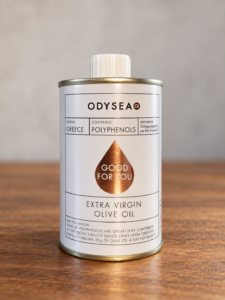
Odysea GOOD FOR YOU – RUANO Tasting
We tried Odysea Good For You, a Koroneiki extra virgin olive oil from Crete. Despite its prominent polyphenol claim, our tasting found a straightforward, unexceptional oil. RUANO Verdict: 6/10.
Extra Virgin Olive Oil

Cosa c’è davvero nella bottiglia? Alla scoperta dell’olio extra vergine di oliva, una bottiglia alla volta
Julia ed io abbiamo iniziato una nuova serie di Degustazioni RUANO, esplorando oli extra vergini di oliva che vanno dai piccoli produttori alle bottiglie più comuni dei supermercati. Per ogni olio valuteremo il profilo sensoriale, mostreremo la RUANO Spiderweb e condivideremo il nostro RUANO Verdict — per scoprire cosa c’è davvero nella bottiglia.

Come Scegliere un Buon Olio Extra Vergine di Oliva
Come scegliere un buon olio extra vergine di oliva tra decine di bottiglie che sembrano tutte uguali? Tipo di olio, contenitore, prezzo, origine, data di raccolta ed etichetta possono dirci molto. Una guida pratica per eliminare le scelte peggiori e riconoscere un EVO che merita davvero di arrivare sulla nostra tavola.

Olio di sansa d’oliva sulle tavole dei ristoranti? No, grazie!
Un ristorante può investire in ottimi ingredienti, ma che senso ha poi portare in tavola olio di sansa d’oliva? Vediamo cos’è realmente questo prodotto, come si differenzia dall’olio extravergine e perché la scelta dell’olio dice molto sulla qualità che un ristorante vuole offrire ai propri clienti.
Oils i've tested

Trappeto di Caprafico BLEND– Degustazione RUANO
Un Blend abruzzese robusto, dal fruttato maturo, con note di pomodoro ed erba/foglia. Leggi le nostre note di degustazione e il verdetto su questo olio per l’uso quotidiano.

Trappeto di Caprafico CROGNALE– Degustazione RUANO
Degustiamo il Crognale di Trappeto di Caprafico, una cultivar abruzzese dal profilo fruttato verde, con note di mandorla fresca, pomodoro ed erba/foglia. Un olio più rotondo e meno robusto dell’Intosso, con piccante ben espresso e amaro più moderato.

Trappeto di Caprafico INTOSSO – Degustazione RUANO
Degustando l’Intosso di Trappeto di Caprafico, un’antica cultivar abruzzese dal profilo fruttato verde, con piccante intenso e persistente, accompagnato da note di erba/foglia, pomodoro e carciofo. Un olio robusto e ben espresso, con un amaro deciso ma ben integrato.

GOOD PHATS Italian Extra Virgin Olive Oil – Degustazione RUANO
Abbiamo provato GOOD PHATS Italian Extra Virgin Olive Oil, un Coratina pugliese. Aromi deboli, piccante più evidente e lievi difetti sensoriali hanno portato al nostro RUANO Verdict di 5/10.

Odysea Good For You – Degustazione RUANO
Abbiamo provato Odysea Good For You, un olio extravergine di oliva Koroneiki di Creta. Nonostante il richiamo ai polifenoli in etichetta, all’assaggio abbiamo trovato un olio semplice e senza nulla di particolarmente eccezionale. Verdetto RUANO: 6/10.