For many years, both food businesses and private people would often ask about water filters, maybe the one they bought or were planning to buy. Often I have run tests on the water filtered by some of them, and when asked me whether they should filter their tap water, my answer was generally: probably not necessary. And there were logic reasons behind it.
In countries such as the UK, and across much of Europe, drinking water is one of the most controlled products we consume. Water suppliers routinely test for microbiological contamination, pesticides and numerous chemical parameters. Treatment processes are designed to remove pathogens, suspended material and a wide range of chemical contaminants.
I therefore never understood the tendency to consider ordinary tap water as something “toxic” that everyone needed to filter.
But it is now 2026, and over the last few years something has changed.
Not the water.
Our knowledge has changed.
Research into microplastics, and particularly the much smaller particles known as nanoplastics, is beginning to reveal something that we simply did not understand properly a decade ago.
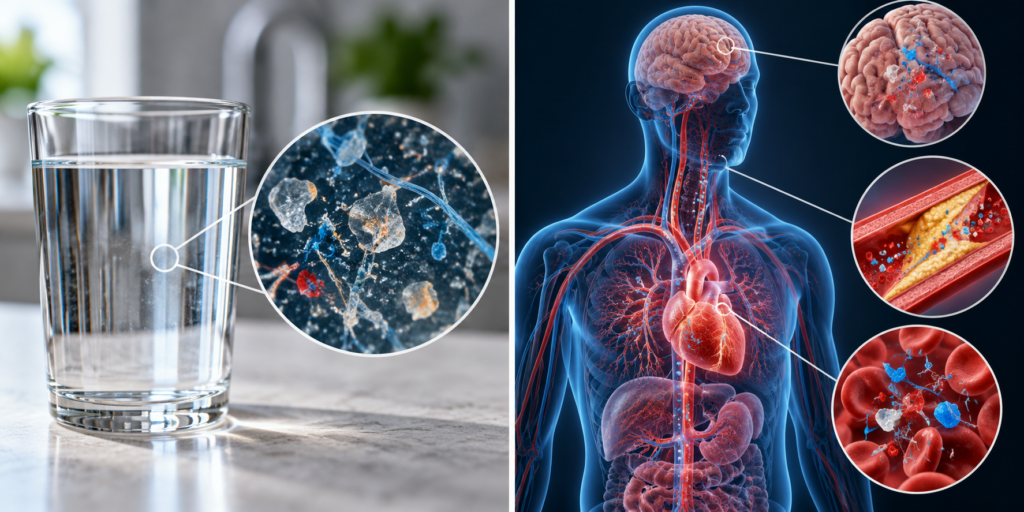
Plastic particles are not only in rivers, oceans, food and drinking water.
They have been detected inside us.
In our blood.
In human tissues.
In arterial plaques.
And, in the human brain.
That evidence has made me reconsider my previous position on home water filtration.
Microplastics and nanoplastics: what is the difference?
We often use the word microplastics for everything, but size matters a lot.
Microplastics are generally defined as plastic particles smaller than 5 millimetres. Some are visible to the naked eye; many are microscopic.
The issue becomes more serious as we move from microplastics to nanoplastics.
Nanoplastics are a lot smaller. A commonly used definition describes them as plastic particles below 1 micrometre, or 1,000 nanometres.
To put this into perspective:
1 millimetre = 1,000 micrometres = 1,000,000 nanometres.
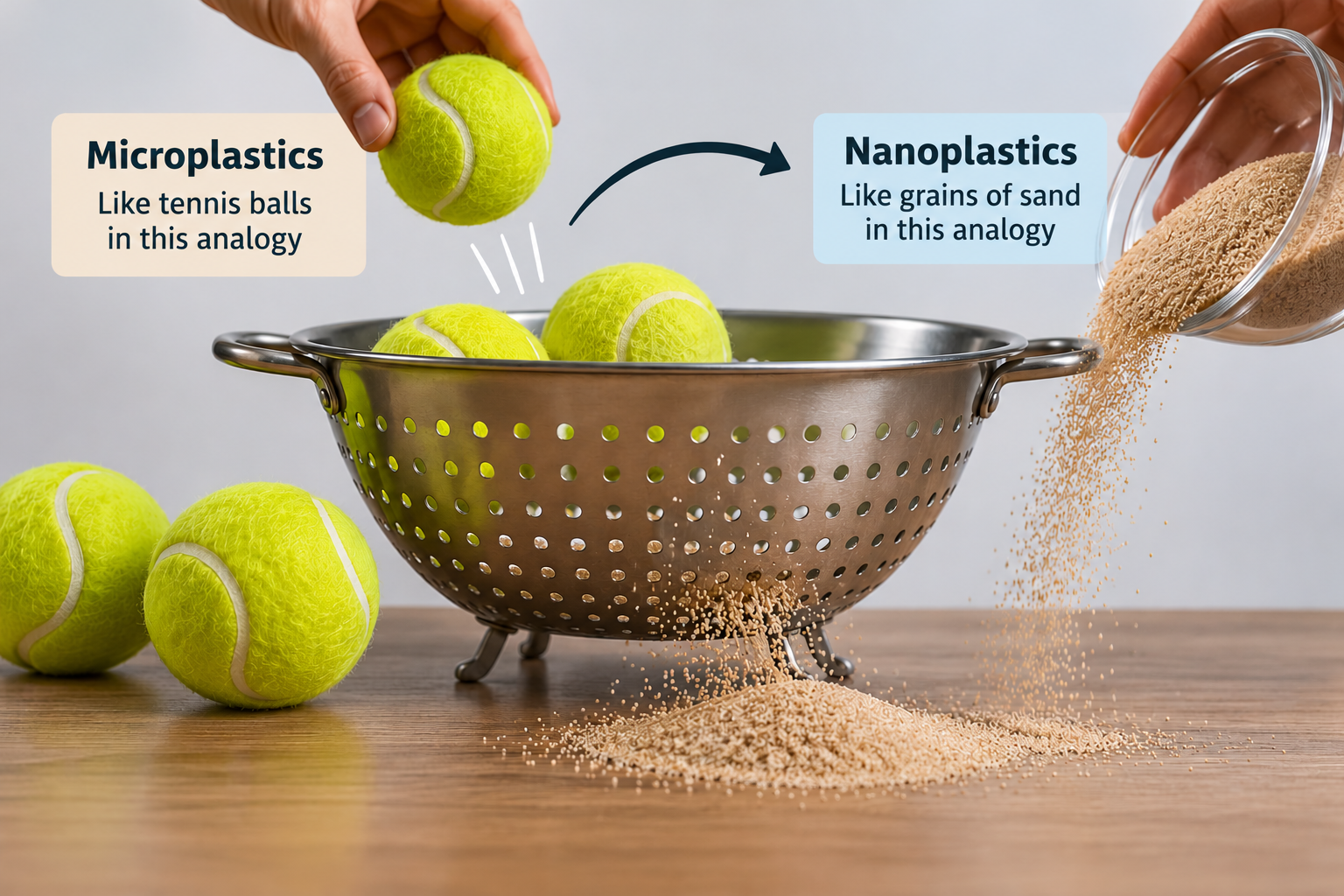
It is like comparing tennis balls with sand grains.
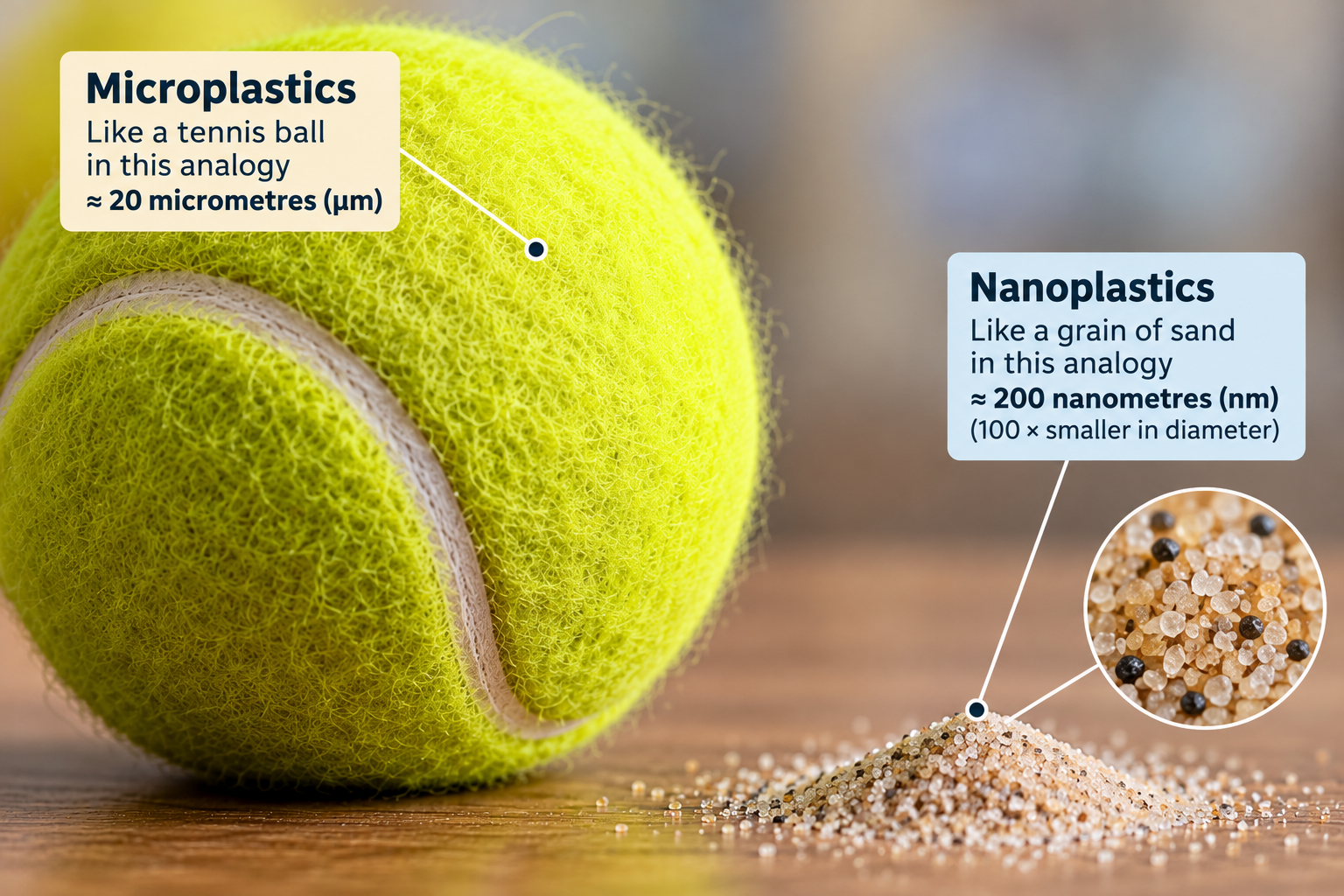
And biologically, this distinction is very important.
Larger particles are much less likely to cross our intestinal barrier. But as particles become sufficiently small, the possibility increases that they can interact with biological membranes, enter tissues and potentially reach cells.
For years, one of the obvious questions was: Does this actually happen in humans?
Well… we now know that it does.
Plastic particles in human blood
In 2022, researchers in Amsterdam published an important study that examined blood of healthy volunteers and detected plastic polymers in the blood of most of them.
The detected materials included polyethylene terephthalate (PET) (see plastic bottles), polyethylene (see plastic bags, milk bottles, plastic films, etc) and styrene polymers (foam cups, insulations boards, packaging, etc), .
This study has demonstrated that plastic particles do not necessarily remain outside the body or simply pass through our digestive system, as maybe we had imagined, or maybe hoped.
They can reach the human circulation.
That immediately raises another question:
If they can circulate in our blood, where can they go?
Plastic in arterial plaques
In 2024, a study published in the New England Journal of Medicine examined carotid artery plaques removed from patients undergoing surgery.
Polyethylene was detected in the plaques of 150 patients, and PVC (see water pipes, vinil flooring, etc) was also found.
Microscopic examination revealed foreign particles within the plaques, including particles within the nanoscale range.
But the most interesting observation came during follow-up.
Patients in whose arterial plaques micro- and nanoplastics had been detected experienced a substantially higher rate of heart attack, stroke or death than patients in whose plaques they had not been detected.
The risk was more than 4 times higher.
This does not prove that the plastic particles caused the cardiovascular events.
But neither is it a finding that I think should simply be dismissed.
The researchers also identified inflammatory responses associated with the affected plaques, fitting with experimental evidence suggesting that micro- and nanoplastics may contribute to oxidative stress and inflammatory processes.
And then came an even more surprising finding.
Plastic particles in the human brain
In 2025, researchers led by scientists at the University of New Mexico published a study in Nature Medicine examining post-mortem human liver, kidney and brain tissue.
Using several analytical techniques, they confirmed the presence of micro- and nanoplastics in all three types of tissue.
But the brain stood out.
Measured plastic concentrations were much higher in brain tissue than in liver or kidney tissue.
Electron microscopy revealed extremely small, shard-like particles.
Polyethylene was the main polymer detected.
The researchers also reported higher measured concentrations in brain samples collected in 2024 than in samples dating from 2016. This was only 8 years difference, showing the increase of our exposure to plastic.
We are now finding plastic particles at extraordinarily small scales in human tissues that we would once have assumed were protected from environmental particles.
We still do not know what decades of exposure and accumulation mean for human health.
But absence of proof of harm is not the same thing as proof of absence of harm.
Through the years, we had several substances that were deemed safe because there were no known negative effects on human health, only for later research to reveal that they were in fact harmful.
What could nanoplastics potentially do?
We cannot currently say that nanoplastics cause dementia, cardiovascular disease, cancer or any other specific human disease simply because particles have been found in human tissues. However many of these diseases have become more common in the last few years and for causes often unknown.
Moreover, laboratory and experimental research gives us legitimate reasons for concern.
Their extremely small size also makes nanoplastics particularly dangerous because their biological behaviour may be very different from that of larger microplastics.
So we have two separate questions.
Can these particles enter the human body and reach tissues?
The answer appears to be yes.
What are the long-term health consequences?
We do not yet know.
Not knowing that something causes harm is not the same as knowing that it is harmless.
Where Do Micro- and Nanoplastics Come From?
Micro- and nanoplastics come from almost everywhere in our environment.
From our clothes, increasingly made from synthetic materials, to carpets, plastic kitchen utensils and containers that release particles through wear, heat and repeated use. Other sources include plastic cups, plastic bottles, food packaging, and particles generated by tyre wear and road traffic.
And the issue is not necessarily limited to the plastic particles themselves. Plastics can contain or carry numerous chemicals, including bisphenols, phthalates, flame retardants, stabilisers and other additives. Some of these substances can migrate out of the plastic, and some are known or suspected to interfere with hormonal and other biological processes.
There are many potential sources around us, and I do think we should take reasonable and practical steps to reduce them wherever we can.
Practical Steps We Can Take
Reduce the use of plastic food containers. Wherever practical, choose glass, stainless steel or ceramic instead.
Use fewer plastic kitchen utensils. Black plastic kitchen utensils deserve particular attention, as some have been found to contain recycled plastics originating from electronic equipment, potentially bringing flame retardants and other unwanted chemicals into food-contact materials.
Avoid heating food in plastic containers. When plastic comes into contact with hot water or food, or even worse, hot oils, it may release chemical substances. So avoid plastic containers, utensils and equipment that come into contact with hot foods and drinks. This includes containers labelled microwave-safe. Use glass or ceramic instead, particularly when heating food in a microwave oven. The same applies to storing or serving hot food: choose glass, stainless steel or ceramic rather than plastic.
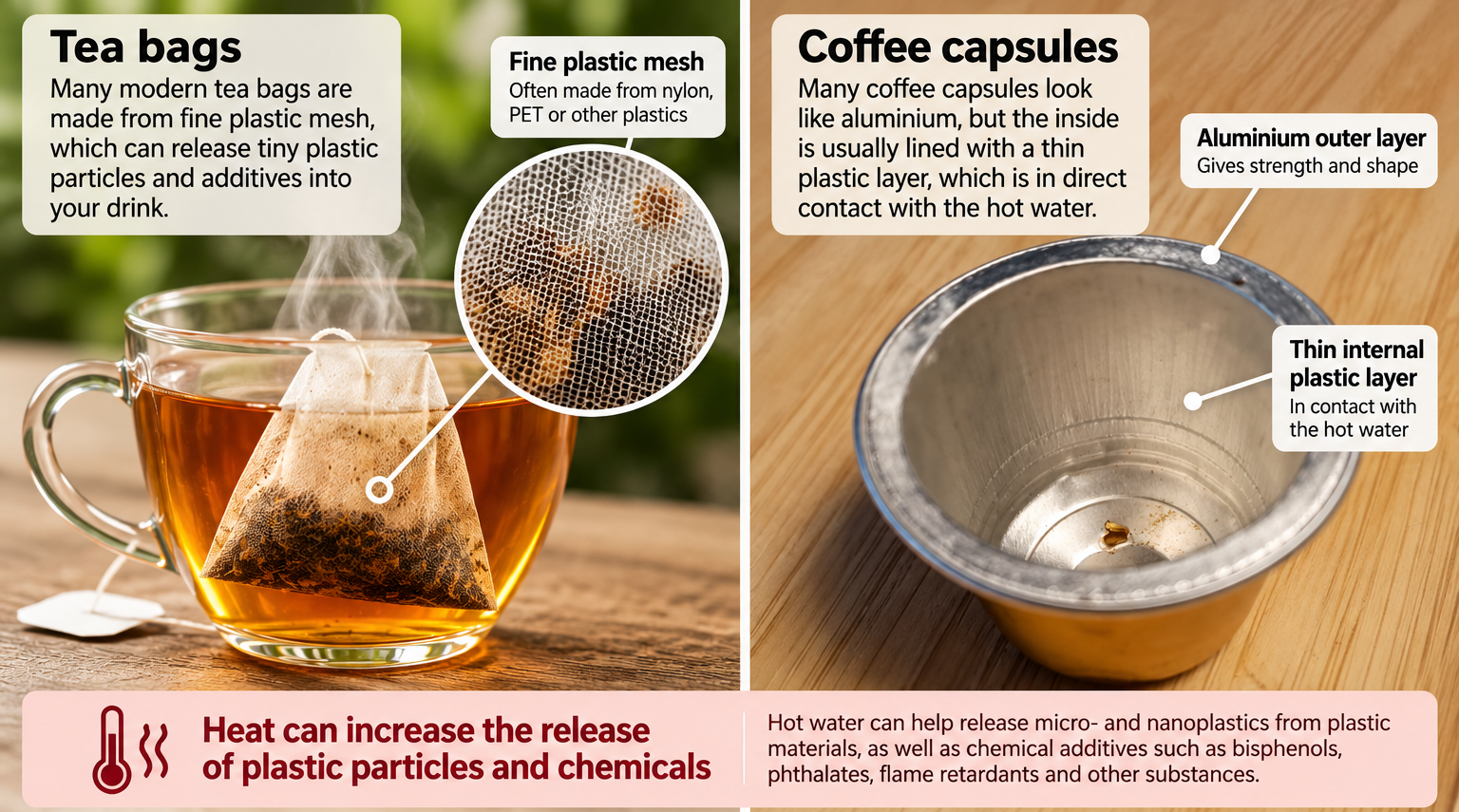
Reconsider how you prepare coffee and tea. Many coffee machines use capsules made from plastic or aluminium with an internal plastic coating. Research has demonstrated that plastic-associated chemicals can migrate into coffee during brewing. When it comes to plastic tea bags, the findings are even more concerning. In a 2019 study, researchers estimated that a single plastic tea bag brewed at 95°C released approximately 11.6 billion microplastic particles and 3.1 billion nanoplastic particles. Further research in 2024 confirmed the release of micro- and nanoplastics from commercial tea bags and demonstrated that they can be absorbed by human intestinal cells.
So…reduce their use where possible, choosing paper coffee pods or, even better, methods that require no pods at all. Avoid tea bags made from fine plastic mesh and choose paper tea bags or loose-leaf tea instead.
Pay attention to tumble dryers. If you use a vented tumble dryer, make sure the exhaust is properly directed outside, rather than allowing fibres to circulate indoors.
Use a vacuum cleaner with a HEPA filter. This helps prevent fine dust and fibres collected during cleaning from being released back into the indoor air.
Consider replacing plastic chopping boards with wooden ones, especially when the plastic surfaces have become heavily scratched or worn.
Filter the water you use for drinking and cooking. This is one important way to reduce the intake of micro- and nanoplastics, and one that deserves particular attention.
What Does All This Have to Do With Drinking Water?
We are not going to eliminate micro- and nanoplastics from modern life, but we can take practical steps to reduce our intake.
And we have to start somewhere.
Drinking water is only one possible route, but it is an obvious place to start because it is something most of us consume every single day throughout our lives—and something over which we have considerable control.
Both tap water and bottled water have been shown to contain plastic particles.
And buying water in plastic bottles is certainly not the solution.
Quite the opposite.
Bottled water may contain surprisingly large numbers of nanoplastics
In a major study published in Proceedings of the National Academy of Sciences in 2024, researchers examined three popular brands of bottled water.
They found approximately 240,000 detectable plastic particles per litre on average.
Around 90% were nanoplastics.
That is an extraordinary number compared with previous estimates, largely because older analytical methods could not adequately see particles at this scale.
PET—the material commonly used to manufacture water bottles—was among the plastics identified.
More recent research comparing conventionally filtered drinking water with bottled water has similarly found significantly higher concentrations of micro- and nanoplastics in bottled water.
So my conclusion is certainly not: Stop drinking tap water and buy bottled water.
From the point of view of plastic exposure, bottled water may actually make matters worse.
What about tap water?
Modern drinking-water treatment is actually very good at removing microplastics of the sizes traditionally measured.
The UK provides a useful case study. The Drinking Water Inspectorate commissioned research examining how effectively conventional treatment removes microplastics. It seems that the removal exceeded 99.99% for the microplastic particles.
That should sound reassuring. But, really, it isn’t.
The particles investigated were vastly larger than the smallest nanoplastics now attracting biological interest. Some 100 times larger.
Assuming that water treatment will remove nanoplastics because it successfully removes much larger microplastics is like testing a colander with tennis balls: none gets through, so we conclude that it must also be capable of sieving grains of sand.
What actually reaches people’s taps?
How many 50, 100 or 300 nanometre plastic particles are present in an average glass of tap water?
The answer is simple.
We don’t know yet, but likely a lot.
And that is the problem.
London: a useful example of a much wider issue
I live in London, so naturally I wanted to understand what the evidence tells us about the water around me.
Research has found microplastics throughout samples taken from the River Thames. Polyethylene and polypropylene were among the predominant plastics identified.
This does not mean that the same concentrations reach London kitchen taps.
But nanoplastics are much harder to measure, and they are not currently monitored.
London provides a useful example—but this is not really a London problem.
Nor is it simply a British problem.
Plastic contamination of water is a global environmental issue, and analytical methods capable of reliably measuring the smallest nanoplastics are only now becoming available.
The same questions therefore apply in Italy, Spain, the rest of Europe and much of the developed world:
What are we measuring? How small can we measure? And what are we currently missing?
Plastics are not the only emerging contaminants in our water sources
And plastic particles are not the only reason I have changed my mind about filtering water.
Modern surface waters contain an extraordinary mixture of substances originating from agriculture, industry, households and human wastewater.
Again, the Thames provides an excellent example.
A study following the River Thames from source to sea detected 41 pharmaceutical compounds.
Antimicrobials were detected at every sampling site downstream of the groundwater-dominated source.
Diclofenac (a common anti-Inflammatory) was detected in 97% of samples.
Other research has investigated endocrine-active compounds, pesticides and numerous pharmaceutical residues in European waters.
Where do they come from?
From our everyday use:
- medicines excreted by humans;
- hormonal medicines, including contraceptive hormones;
- veterinary pharmaceuticals;
- wastewater discharges;
- agricultural pesticides;
- manure applied to farmland;
- industrial and household chemicals.
This does not mean that London—or European—tap water contains dangerous concentrations of all these substances.
Water treatment removes or substantially reduces many of them,
Pesticides are also specifically regulated and monitored.
However, they illustrate something important: the water sources from which our drinking water comes have become crazily full of contaminants.
We are continually identifying new contaminants, new metabolites and increasingly smaller particles that older analytical techniques could not adequately measure.
So, how should we filter the water we drink and use for cooking?
What is the best filtration method?
Reverse osmosis (RO).
Why?
Because I am not trying to sterilise drinking water that has already been disinfected.
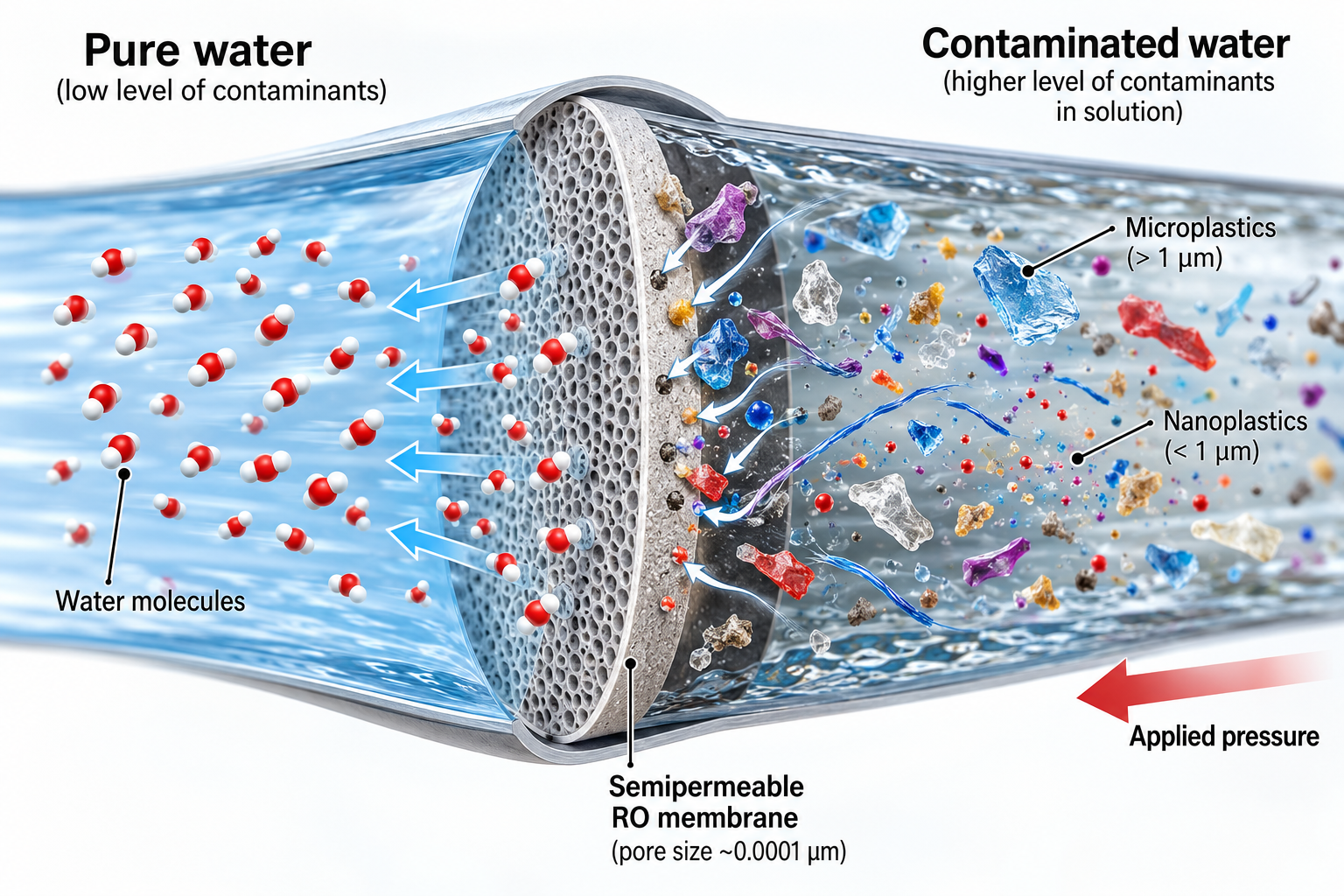
I want an additional barrier capable of removing contaminants that conventional water treatment may leave behind, particularly extremely small particles and dissolved trace contaminants.
A domestic reverse-osmosis system treating chlorinated mains water normally combines several filtration stages.
Typically: sediment filtration → activated carbon → reverse-osmosis membrane.
Activated carbon can adsorb many organic micropollutants, including numerous pharmaceutical and endocrine-active compounds.
The RO membrane then provides a second, completely different barrier.
Reverse osmosis is capable of rejecting nanoplastic particles.
Research into water treatment supports RO and nanofiltration as highly effective technologies for removing many pesticides, pharmaceuticals and other organic micropollutants.
In one study comparing domestic water-treatment methods against 13 pesticides, both activated carbon and reverse osmosis achieved complete removal of the tested pesticides under the experimental conditions.
That does not mean that every £150 domestic RO unit removes 100% of every contaminant forever.
Performance depends on membrane quality, pressure, contaminant chemistry, filter condition, maintenance and system design.
But scientifically, the treatment principle is well established.
And the combination of activated carbon + reverse osmosis gives us two complementary treatment mechanisms.
What About Jug Filters?
This is question I get quite regularly.
Most conventional water-filter jugs are not reverse-osmosis systems. They generally use activated carbon and ion-exchange resins, which can remove or reduce certain dissolved contaminants, but they do not provide the same physical barrier against nanoplastics as an RO membrane.
What about jug filters that produce water with a Total Dissolved Solids (TDS) reading of zero?
These filters can remove virtually all dissolved minerals and reduce other dissolved contaminants, but a TDS reading of zero does not mean the water is free of nanoplastics.
TDS measures dissolved substances, not plastic particles.
Without an effective particle-removal barrier, a zero-TDS reading provides no assurance that nanoplastics have been removed.
Is there a downside with Reverse Osmosis?
Of course.
Reverse osmosis also removes much of the mineral content of water.
However this is not a too big an issue and minerals we do not get through water, can be obtained from food.
For millennia, mankind have drunk rain water, which is demineralized water.
Another downside is that filters and membranes require replacement. Poorly maintained equipment can itself become a hygiene problem.
So if you are choosing one, I would look for independently tested performance, appropriate certification, and availability and cost of replacement filters, rather than simply buying the cheapest machine online.
Some systems also remineralise the water after RO treatment. I personally feel that this is not necessary and, in fact, is a possible way of re-contaminating the filtered water with micro- and nanoplastics.
So, Why I changed my mind
Well… because
Today we know that plastic particles can enter human blood.
We have detected them in human tissues and arterial plaques.
We have identified micro- and nanoplastics in human brain tissue.
We know that drinking water can contain nanoplastics.
We know that bottled water can contain surprisingly large numbers of them.
And we know that the analytical methods traditionally used to assess microplastics frequently could not even detect the smallest particles that are now of greatest biological interest.
The long-term health consequences remain uncertain.
Not knowing that something causes harm is not the same as knowing that it is harmless.
The reasons to filter our water are now compelling.
The reasons to filter our water are now compelling.
Because drinking water is something we consume every day.
Because the water used for cooking also contributes to our intake of plastic,
Because reverse osmosis is an established technology, and a good domestic system can substantially reduce many contaminants , including micro- and nanoplastics.
Because if I can reasonably reduce a continuous and unnecessary exposure to potentially harmful substances, I see no good reason not to.
Not because I have suddenly become afraid of tap water.
Because in 2026 we can now see things in it—and inside ourselves—that only a few years ago we could barely measure.
Scientific References and Further Reading
The following studies and scientific reviews provide the evidence discussed in this article, covering micro- and nanoplastics in human tissues, drinking water, chemical contaminants and filtration technologies.
1. Leslie et al. (2022) — Plastic particles in human blood
Environment International
The landmark study involving 22 healthy volunteers, which detected plastic particles in human blood and identified several polymer types.
Read the original human-blood study
2. Nihart et al. (2025) — Micro- and nanoplastics in human brain, liver and kidney
Nature Medicine
A major human-tissue study reporting higher measured concentrations of micro- and nanoplastics in brain tissue than in liver and kidney tissue, with nanoscale particles observed using electron microscopy.
Read the Nature Medicine study
3. Marfella et al. (2024) — Micro- and nanoplastics in carotid artery plaques
New England Journal of Medicine
This study detected plastic particles in carotid artery plaques and found an association between their presence and an increased incidence of cardiovascular events and death during follow-up.
Read the original cardiovascular study
4. Qian et al. (2024) — Nanoplastics in bottled water
Proceedings of the National Academy of Sciences (PNAS)
The study behind the widely reported finding of approximately 240,000 detectable plastic particles per litre of bottled water, around 90% of which were nanoplastics.
Read the NIH explanation of the research
5. Comparative study (2025/26) — Micro- and nanoplastics in treated tap water and bottled water
A comparative study using analytical methods capable of detecting particles down to approximately 300 nanometres. Bottled water showed significantly higher concentrations of micro- and nanoplastics than conventionally treated drinking water.
Read the comparative study on PubMed
6. White et al. (2019) — Pharmaceuticals in the River Thames
Environmental Pollution
Researchers detected 41 pharmaceuticals and two lifestyle compounds in samples collected along the Thames. The study illustrates the range of pharmaceutical contaminants entering river water, rather than concentrations in finished drinking water.
Read the original Thames study
7. Domestic water-treatment study (2023) — Removal of 13 pesticides
A study comparing domestic water-treatment methods, in which activated carbon and reverse osmosis achieved complete removal of the 13 pesticides investigated under the experimental conditions.
Read the pesticide-removal study
8. Scientific review — Activated carbon, pharmaceuticals and endocrine-disrupting compounds
A review examining the removal of pharmaceutical residues and endocrine-disrupting compounds using activated carbon, supporting its role in domestic water-treatment systems.
Read the activated-carbon review
9. Scientific review — Reverse osmosis, nanofiltration and pesticide removal
Desalination
A review of pressure-driven membrane technologies and their effectiveness in removing pesticides and other organic contaminants from water.
Read the reverse-osmosis and nanofiltration review
10. Hernandez et al. (2019) — Plastic tea bags release billions of micro- and nanoparticles
Environmental Science & Technology
Researchers estimated that a single plastic tea bag brewed at 95°C released approximately 11.6 billion microplastic particles and 3.1 billion nanoplastic particles. The study highlights the potential contribution of plastic tea bags to particle intake through hot drinks.
Read the original tea-bag study
11. Banaei et al. (2024) — Micro- and nanoplastics released from commercial tea bags
Chemosphere
Researchers confirmed the release of micro- and nanoplastics from commercial tea bags and demonstrated that particles released from these materials could be taken up by human intestinal cells under laboratory conditions.
Read the 2024 tea-bag study
12. Valverde-Som et al. (2021) — Migration of plastic-associated chemicals from coffee capsules
Food Packaging and Shelf Life
Researchers investigated the migration of polymer additives from coffee capsules into brewed coffee, identifying substances including plasticisers and other compounds associated with plastic packaging.
Read the coffee-capsule migration study